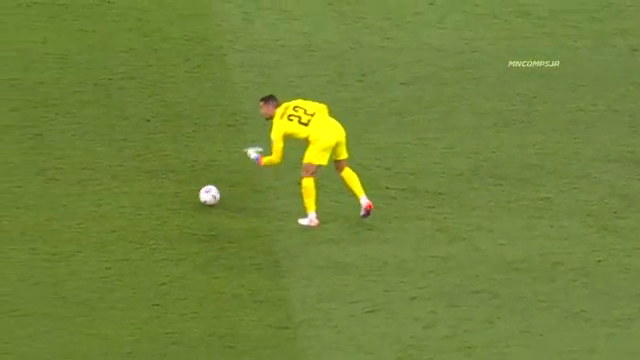
RONALDO MAKES HISTORY 😱 PORTUGAL 3-2 GHANA | HIGHLIGHTS


Channel: MNcompsJR2
Uploaded by MNcompsJR2 on 20260629
Categories: Sports
Tags:
Portugal 3-2 Ghana | All Goals & Highlights

Overview of the Video

The video, titled "How to Use Whisper API in Python (Speech to Text & Translation)" (published by the software development channel NeuralNine), provides a comprehensive, hands-on coding tutorial on integrating OpenAI's cloud-hosted Whisper API into custom Python applications. The tutorial covers two main tasks: transcribing spoken audio into text and automatically translating foreign speech into English text.

The title is written in English, so the following detailed structural and programmatic analysis is provided entirely in E


Image for chunk 1

nglish.

Prerequisites & Infrastructure Setup

Before diving into the code, the video details the setup required to successfully communicate with OpenAI's endpoints:

========================================================================

DEVELOPMENT ENVIRONMENT SETUP

========================================================================

1. Pip Installation: pip install openai python-dotenv

2. Credential Safety: Create a hidden '.env' file in the root folder

3. Environment Structure: OPENAI_API_KEY="your_secret_api_k

Image for chunk 2

ey_here"

========================================================================

Using the python-dotenv package is highlighted as an industry best practice to prevent accidentally hardcoding sensitive API credentials directly into public source code repositories.

Core Functionality 1: Speech-to-Text Transcription

The first programming example demonstrates how to process a standard audio file (such as an .mp3, .wav, or .m4a) and generate a highly accurate text transcript.

Execution Workflow:

[ Local Audio File ] ---> [ Open File in Read-Binary ('

Image for chunk 3

rb') Mode ]

|

v

[ OpenAI Client Request ]

|

v (Model: whisper-1)

[ Terminal Output ] <--- [ Extract transcript.text Response ]

Core Code Logic:

The tutorial implements the modern OpenAI Python SDK syntax to make the API call:

Python

import os

from openai import OpenAI

from dotenv import load_dotenv

load_dotenv()

client = OpenAI() # Automatically reads OPENAI_API_KEY from environme

Image for chunk 4

nt

# Open the audio target file

with open("audio_sample.mp3", "rb") as audio_file:

transcript = client.audio.transcriptions.create(

model="whisper-1",

file=audio_file

)

print(transcript.text)

Core Functionality 2: Real-Time Audio Translation

The second part of the tutorial addresses Whisper's native translation capability. If an audio file contains speech in a foreign language (e.g., Spanish, German, French), the will translate and transcribe that audio directly into English text in a single step.

=========================

Image for chunk 5

===============================================

WHISPER TRANSCRIPTION VS. TRANSLATION

========================================================================

* transcriptions.create: Audio (Spanish) ----> Text (Spanish)

* translations.create: Audio (Spanish) ----> Text (English)

========================================================================

Translation Implementation:

To perform the translation, the method changes slightly, shifting from the transcriptions endpoint to the translations endpoint:

Python

with open("s

Image for chunk 6

panish_speech.mp3", "rb") as audio_file:

translation = client.audio.translations.create(

model="whisper-1",

file=audio_file

)

print(translation.text)

Technical Constraints and Optimization Parameters

Parameter / Limit Specification Purpose / Troubleshooting

Max File Size 25 MB Files exceeding this limit must be pre-split into smaller chunks using Python libraries like pydub.

Supported Formats mp3, mp4, mpeg, mpga, m4a, wav, webm Standard compressed and uncompressed audio containers.

The prompt Parameter Optional String Can be

Image for chunk 7

passed into the request to guide spelling, maintain formatting styles, or inject rare custom vocabulary/acronyms.

The video wraps up by executing both scripts live in a terminal window, showing how raw conversational audio files are parsed, processed remotely by OpenAI's servers, and returned as clean, punctuated strings in a matter of seconds.

You can reference a similar open-source demonstration workflow on the OpenAI Whisper Guide to understand local execution alternatives.

Transcribe Audio Files with OpenAI Whisper - YouTube

NeuralNine · 64K view

Image for chunk 8

Viewer Discussion & Comments

@HolyFlameMusic101
lets gooooo!!
@Footballfusion-5
Bro how did you make this video without any copy rights issue
@DeepakSisodiya-q6u
Your explanation is worth sharing I enjoyed every second of it.
@Roman-s3x1m
J’adore ce format
@BhanuMk-f7y
The idea is very impressive I will definitely recommend this.